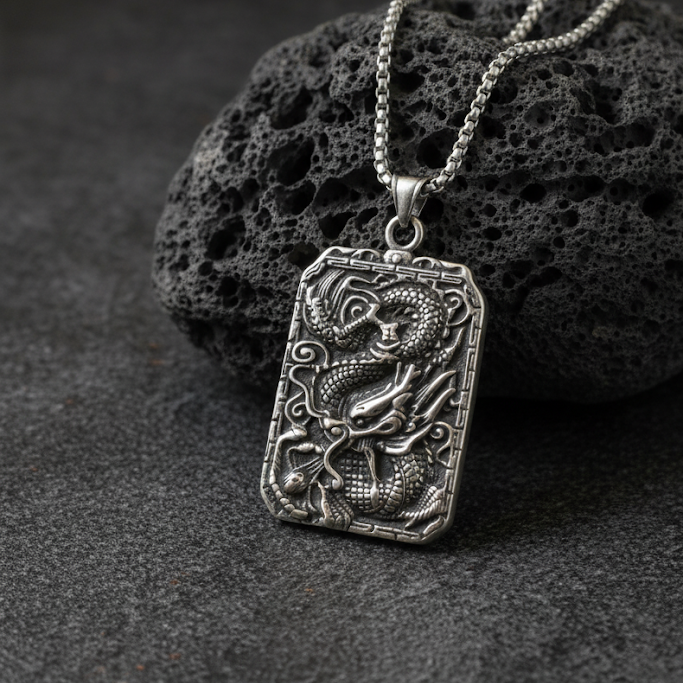
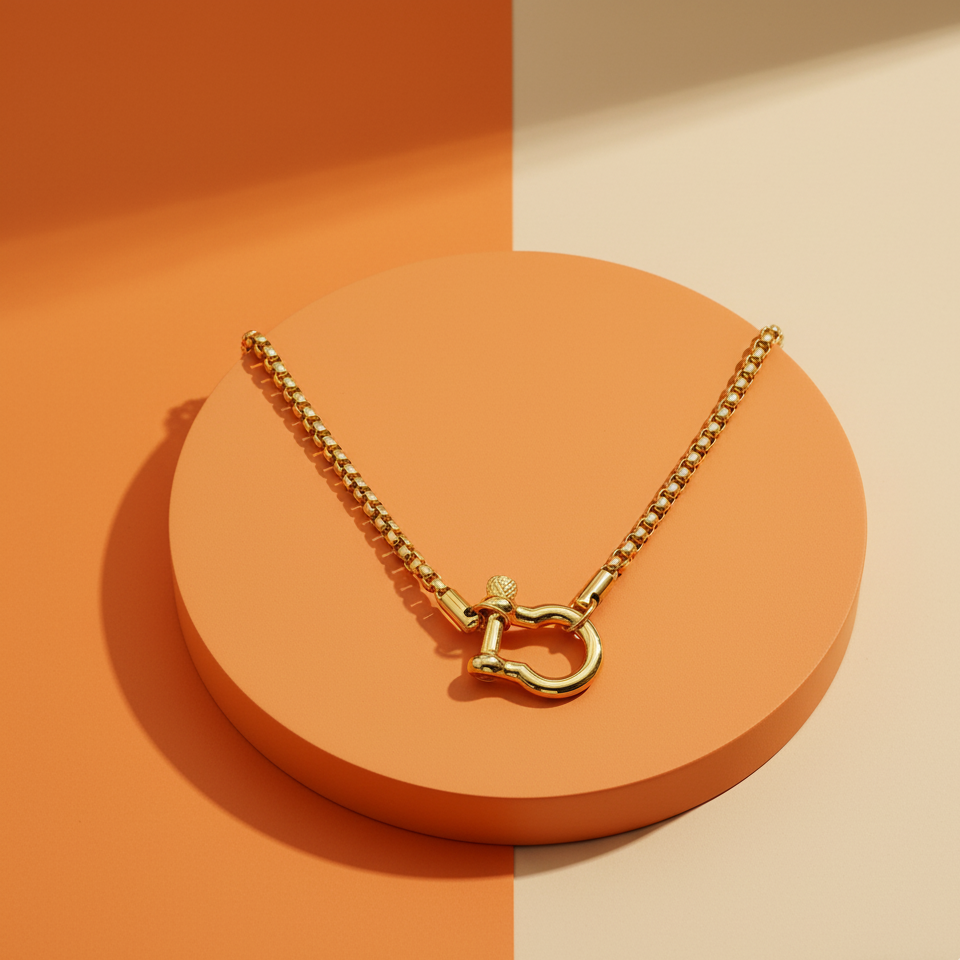
Introduction: A metal pendant in the gym is a swinging object near fixed equipment, so comfort comes down to three contact points: bars and machines, clothing layers, and dried sweat.
Most people who bring a trophy pendant to the gym worry about sweat first — whether the gold tone goes dull, whether the chain leaves a mark, whether the metal feels hot against the skin after ten minutes on a machine. Those questions are reasonable, but they are rarely the ones that decide whether a session feels fine or irritating. The bigger variable is movement. A pendant hangs from a chain with nothing holding it steady, and a gym puts that swinging piece of metal right next to benches, bars, dumbbells, cable handles, machine pads, and hoodie collars. Once you see those three contact points clearly, deciding when to keep the necklace on and when to take it off becomes much simpler.
Standing still, a pendant behaves predictably. Gravity pulls it down, the chain rests against the back of the neck, and a 3D trophy shape sits flat enough against the sternum to feel settled. Training changes that geometry in a hurry. Tilt the torso forward for a bent-over row and the pendant swings away from the chest like a plumb line. Lie back on a bench and it slides toward the throat or drifts off to one side. A sculpted trophy has real depth, so it stands off the chest instead of lying flat against it, and that small standoff is exactly what turns a piece of jewelry into something you notice mid-set.
Think about where a loaded bar travels during a bench press or an overhead press: straight over the chest and the collarbone, which is where the pendant sits. Even a smoothly finished edge becomes a pressure point when a few hundred pounds presses it into the chest wall, and on a seated row or lat pulldown the pendant can swing forward into the handle at the end of the rep. Dumbbells racked at shoulder height create the same closing gap. The issue here is bumping and pinching rather than the metal giving way — a stainless steel trophy pendant is a solid little object, and solid objects feel every bit as hard against a sternum as they look.
Fabric decides how much freedom the pendant gets. A fitted cotton tee holds the chain close to the neck and keeps the trophy from swinging wide; a loose tank or an open jersey lets it move freely, which feels great until the bottom of a squat. Hoodies are the sneaky one. A thick collar, a metal zip, or a drawstring sits exactly where the chain rides, and any of them can catch a link and pull it upward against the throat mid-rep. Wearing the pendant underneath a hoodie traps the chain against the neck; wearing it on top lets the pendant bounce against the chest with every step. Neither is dangerous, but both change how the piece feels after twenty minutes.
LUMIERE describes this piece as sweat-proof, waterproof, and anti-tarnish, with a 316L surgical stainless steel body, a welded link chain, and a lobster clasp. Those are the brand's material claims, and 316L is genuinely a corrosion-resistant grade that holds up well against everyday perspiration. But sweat-proof describes what happens to the metal, and sweat residue is a different thing entirely. Perspiration is salt water with oils mixed in, and when it dries it leaves a film behind. That film collects in the places a cloth never reaches: inside the spring housing of the lobster clasp, in the gaps between chain links, and in the recessed curves of a 3D trophy shape. Dried salt is gritty, and grit sitting between a polished surface and a shirt collar is what gradually softens a mirror finish. That is why a gold soccer trophy necklace can look perfect after a month of desk wear and noticeably less bright after a month of heavy training. There is a comfort side too. Wet skin plus a chain that shifts with every rep creates a rubbing line across the back of the neck, and that friction is felt long before any surface change shows up. The lifetime mechanical warranty covers structure and hardware, which is the right scope for a clasp or a link. Surface appearance after repeated sweaty sessions sits outside that kind of coverage, so residue is worth paying attention to as a wear condition rather than a metal failure.
Plenty of gym time is calm enough for jewelry. An incline walk, a stationary bike session, a warm-up on the elliptical, stretching and mobility work, light dumbbell curls with arms away from the chest, or simply moving between machines with an upright torso — in all of those, the pendant stays close to the body, the hands stay clear of it, and nothing presses it into the chest. That is the zone where a world cup trophy pendant necklace behaves like any other everyday necklace, and where the motivational value of wearing a winner's symbol during a workout actually makes sense. Heavy training flips the calculation. Barbell bench presses, overhead presses, Olympic lifts, kettlebell swings, bent-over rows, inverted rows, sprint intervals, and any movement that puts the torso horizontal or brings the hands across the chest all create the same closing gap between pendant and equipment. Formal soccer handles this with a hard rule: Law 4 of the Laws of the Game, published by IFAB, prohibits dangerous jewelry outright during a match, which removes the judgment call entirely for players. A gym has no referee and no such rule, so the wearer makes the decision set by set — and the most practical version of that decision is to notice whether a movement brings the pendant within a hand's width of a bar or handle, or tips the chest toward horizontal. If either happens, taking it off for that block of work is the sensible move; if neither happens, keeping it on is perfectly reasonable.
Gym wear comes down to a short, practical read of the room. A trophy pendant is a solid, polished metal object on a free-hanging chain, and it does best when the torso stays upright and the hands stay away from the chest. It does worst when a bar passes directly over it, when a hoodie collar grabs the chain, or when dried sweat turns into grit against a mirror finish. Splitting a session into calm blocks and heavy blocks is the simplest way to enjoy the necklace without thinking about it constantly — wear it for the warm-up, the cardio, and the walk in, and give it a rest for the sets that press iron against your sternum. That balance keeps the symbol meaningful and the training comfortable.
A: For light dumbbell work, machine circuits, and warm-up sets, yes — the pendant stays near the chest and nothing presses against it. For barbell bench presses, overhead work, kettlebell swings, and any lift that puts the torso horizontal, removing it first is the more sensible choice. The deciding factor is whether the pendant ends up between your chest and a loaded bar or handle. When that gap closes, a solid metal object becomes a pressure point, and taking it off for that block avoids the pinch entirely.
A: Three things stack up. A pendant hangs freely, so tilting or lying back lets it swing away from the body and into new positions. A 3D sculpted trophy stands off the chest rather than lying flat, which gives it more chance to meet a bar, a pad, or a collar. And sweat makes the chain slide more than dry skin does, so the piece keeps shifting instead of staying put. Individually each is minor; together they turn a necklace you forget about at a desk into something you notice mid-rep.
A: Removing it after a heavy, sweaty session is a good habit, mainly because dried salt and skin oils settle into the clasp spring, the link gaps, and the recessed curves of the trophy shape. A 316L stainless steel body resists corrosion well, and the brand describes the piece as sweat-proof and anti-tarnish, but residue left sitting against a polished surface gradually dulls the shine and adds grit against the skin. Taking it off lets both the metal and your neck settle before the next session.
Physical Activity Guidelines - ACSM
Law 4 - The Players' Equipment - IFAB